
Plants on Fire: Clash & Defend
Shimmer DreamStrategy
4.7487.00 Reviews
- Version
- 3.0.1030.0
- Installs
- 50.00K
- Age Rating
- Everyone
Screenshots
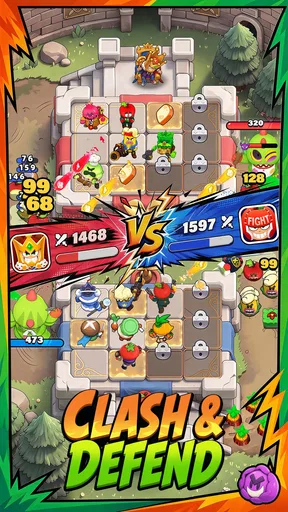
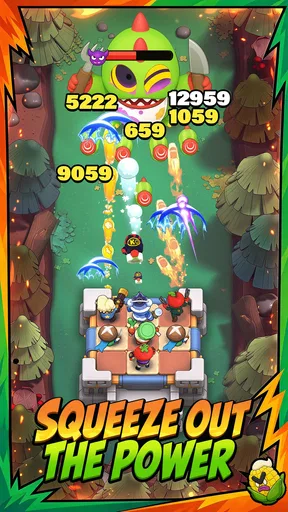
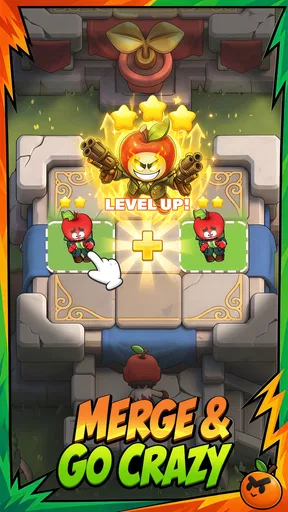
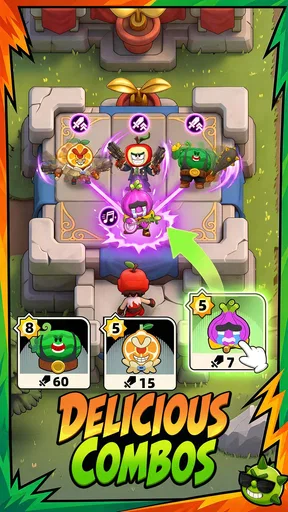
Our Review of Plants on Fire: Clash & Defend
 Analysis by Appyee
Plants on Fire: Clash & Defend is a strategy game from Shimmer Dream that I found easiest to understand when I treated each match as a short decision-making exercise rather than a traditional tower-defense marathon. Its basic appeal is clear: combine unusual plants, build useful combinations, and react to another player before the battle gets away from you. The matches are designed around roughly three minutes, so it fits the kind of gaming session I might start while waiting for a bus or taking a short break.
That short format also defines the experience. I do not have much time to recover from a poor opening choice, and the pressure of a live head-to-head battle makes every placement feel more important than it would in a relaxed single-player campaign. I enjoyed that urgency, although it will not suit everyone. Players who prefer slow planning, long campaigns, or a completely predictable pace may find the format demanding.
The game is free to start and is rated for Everyone, which makes it approachable on paper for a broad audience. It includes optional in-app purchases ranging from $0.99 to $199.99 per item, so I would still recommend that families discuss spending controls before handing it to a child. The current version is 1.0.1014.0, and it requires Android 7.0 or later when played on Android.
How clearly the game communicates during a fast match
My first impression was that the central idea is easier to grasp than the full tactical layer. The plant-merging concept gives the game a recognizable visual language: I look for combinations, judge what is worth improving, and try to turn those choices into pressure on the opposing side. That is a sensible foundation for a strategy game aimed at quick sessions.
Where clarity matters most is during the match itself. A three-minute battle leaves little room to stop and decode a crowded screen. I found it helpful to establish a personal routine: check the available plants first, identify the immediate threat second, and only then commit to a merge or defensive action. That habit reduced rushed decisions and made the board feel less noisy.
New players should resist the temptation to merge the first useful plants they see. A stronger-looking unit is not automatically the best answer if the opponent is already building pressure elsewhere. I had better results when I paused long enough to ask what the next merge would solve. Would it protect a weak lane, create a counterattack, or simply consume resources without changing the situation? That small question adds more depth than the bright effects initially suggest.
Navigation is also important for players who do not enjoy learning through trial and error. The game’s short-match structure means menus and pre-battle choices need to be understood quickly, but I would not describe the experience as completely effortless. Anyone who struggles with dense game screens, small labels, or rapid changes may need extra time before the controls become comfortable. Playing a few low-pressure rounds and focusing on one interaction at a time is a better learning method than trying to master every plant immediately.
I also appreciate that the game’s concept does not require a long explanation to be interesting. The combination of defense, merging, and direct competition gives me an immediate goal. At the same time, the store summary promises more than a simple matching puzzle: the real challenge is deciding when a combination is worth using and when saving flexibility is wiser. That distinction is what keeps the strategy from becoming purely automatic.
Readable decisions matter more than flashy effects
In a competitive game, visual feedback has a practical job. I need to know whether a merge helped, whether a defensive position is holding, and whether an opponent’s move requires an immediate response. When those signals are easy to separate, the match feels strategic. When several actions happen together, the experience can become harder to follow, particularly for someone with reduced vision, attention difficulties, or limited familiarity with this type of game.
My most useful adjustment was to stop watching every animation and instead follow the board state. I looked for the location of the threat, the plant that could answer it, and the space that would be left afterward. This approach is useful for any player, but it is especially helpful when visual effects compete with the information needed to make a decision.
Text size and contrast can also affect whether a person can play comfortably, and those details are more noticeable on a small phone than on a larger display. I would test the game on the device that will actually be used, rather than assuming that a layout comfortable on one screen will feel equally clear on another. If the interface feels cramped, a larger phone or tablet may make the board easier to inspect, provided the game runs comfortably there.
Motor demands and sensory comfort
Plants on Fire: Clash & Defend is built around quick choices, so timing and touch accuracy matter. I found that deliberate taps were safer than hurried swipes or repeated touches. In a tense round, it is easy to select the wrong plant or commit before checking the whole board. Players with limited fine-motor control may find that pressure more significant than the strategy itself.
A practical workaround is to hold the device securely and play with the hand that gives the best control, rather than trying to imitate a particular grip. A stand can help someone who tires while holding a phone, and a larger screen may provide more room for accurate selection. These are ordinary setup changes, but they can make a short competitive session far less tiring.
The sensory side deserves equal attention. Fast battles, movement, sound, and visual reactions can make the game feel energetic, yet those same elements may be uncomfortable for players who are sensitive to motion, bright effects, or repeated audio cues. I would begin with a brief session at a comfortable brightness and volume, then decide whether the presentation remains pleasant. Playing without sound may be preferable for some people, especially in shared spaces or when audio feedback becomes distracting.
There is also a concentration cost. Because the match is short, the game can encourage a “one more round” rhythm, and each round asks for sustained attention rather than passive waiting. That is enjoyable when I want a focused challenge, but less suitable when I am already tired, multitasking, or trying to relax with minimal mental effort.
Playing in real-life situations
The short format is one of the strongest practical advantages. I can imagine using it during a coffee break, while waiting for an appointment, or after finishing a small task at home. A match does not demand the long commitment of a conventional campaign, and the compact structure makes it easier to stop after a single battle.
However, “short” does not always mean “easy to interrupt.” A live competitive round still expects attention until the outcome is decided. If I am about to board a train, answer a call, or enter a meeting, starting a match may be a poor choice even if I have a few minutes available. The game fits planned micro-breaks better than unpredictable situations.
For players with fluctuating energy or attention, the best use may be to treat matches as optional exercises rather than a daily obligation. On a focused day, the quick battles provide a satisfying tactical test. On a difficult day, the same speed can feel like pressure. I would avoid judging the game solely by its strongest sessions; accessibility also means being honest about when the design asks too much.
Its Everyone age rating broadens the potential audience, but age suitability and individual suitability are not identical. A younger player may understand the merge idea quickly while still finding the competitive pace frustrating. An older player might enjoy the strategy but want clearer information before committing to a move. In both cases, a short supervised introduction can reveal more than the rating alone.
The purchase structure is another situational consideration. Since the game is free to play, trying it does not require an upfront payment, but optional items can become a concern in a shared family environment. I would use device-level purchase restrictions and explain that free access does not mean every item inside the game is free. That is particularly important when a player is focused on winning and may feel tempted to spend impulsively.
What makes it different from slower strategy games
Compared with traditional tower-defense games, this one places more emphasis on improvisation and direct competition. A long-form tower defense usually gives me time to study a map, build a stable layout, and learn enemy patterns across repeated attempts. Here, the limited match window makes adaptation more important. I cannot rely only on a carefully prepared defense; I have to respond to the opponent and make the most of what appears in front of me.
That difference is a strength for players who lose interest during lengthy levels. It is also a weakness for anyone who enjoys elaborate planning and gradual optimization. A slower alternative is better when I want to experiment without a clock or develop a strategy over a long session. Plants on Fire: Clash & Defend is more appealing when I want compact decisions with immediate consequences.
It also differs from a purely casual merging game. The merge action is not just a calming sorting activity because the result affects a competitive battle. I have to think about timing, position, and opportunity cost. The trade-off is that a mistake feels more personal and more immediate. If I am looking for a quiet puzzle with no opponent to pressure me, this is probably not the right choice.
Barriers that prospective players should consider
The biggest barrier is the combination of speed and uncertainty. A player may understand the rules but still struggle to act quickly enough. That is not a lack of strategic ability; it is a mismatch between the game’s tempo and the player’s preferred processing time. I would skip it if rapid decisions consistently cause stress, eye strain, or hand fatigue.
Another barrier is the learning curve hidden inside a simple premise. Merging plants sounds immediately approachable, but competitive value depends on knowing which improvement matters now rather than later. Players who expect every upgrade to be obviously better may feel confused when a smaller tactical response is more useful than a larger-looking merge.
Device comfort can change the experience substantially. A small screen, unreliable touch response, or tiring grip can turn a clever match into a frustrating one. Before deciding that the game itself is unsuitable, I would try a stable surface, a comfortable brightness, and a screen that gives enough room to inspect the board. If those changes do not help, the fast format may simply be the wrong fit.
The spending range also deserves a clear warning. The game costs nothing to begin, but the presence of optional purchases means it is not ideal for someone who wants a completely purchase-free environment without adjusting device settings. I would be particularly cautious with children or with anyone who finds competitive progression difficult to resist.
Finally, the live nature of the battles may make connectivity and interruptions more consequential than in an offline puzzle. I would choose a stable moment to play rather than starting a round in a place where the phone may be taken away, the signal may change, or attention may be divided. A short match can still be a poor fit for an unpredictable setting.
My inclusive verdict after playing
I see Plants on Fire: Clash & Defend as a focused, compact strategy game with a clear hook and a surprisingly demanding pace. Shimmer Dream has chosen a format that can fit naturally into spare moments, while the plant-merging system gives each round more texture than a simple reflex challenge. Its average rating is 4.8 from over 400 ratings, and the game has passed 10K+ installs, which suggests that its concise competitive idea has found an interested audience.
For me, the strongest use case is a player who enjoys mobile strategy but does not want to spend half an hour on one level. The game works well when I have a quiet break, a comfortable screen, and enough attention to finish a live round. I especially like the discipline of asking what each merge accomplishes instead of treating every combination as an automatic upgrade.
I would recommend trying it cautiously if you need slower pacing, larger and calmer interfaces, or generous time to consider every move. The Everyone rating makes the concept broadly approachable, but it does not remove the practical challenges of speed, visual density, touch precision, and competitive pressure. Those factors matter more than the label when deciding whether the game is comfortable for a particular person.
My bottom line is simple: this is a good choice for short, active strategy sessions, not a universal fit for relaxed or interruption-heavy play. Set up the device for comfortable viewing, keep purchase controls in place, and use the first few rounds to judge whether the pace feels exciting or exhausting. If the quick decisions sharpen your attention, Plants on Fire: Clash & Defend can make a small break feel meaningfully engaging. If you need time, quiet, or complete control over the tempo, a traditional single-player tower-defense game will likely serve you better.
Privacy and Permissions
See what permissions an app requests and how it handles your data.
- Device & app history
- retrieve running apps
- Location
- approximate location (network-based)
- Phone
- read phone status and identity
- Photos/Media/Files
- read the contents of your USB storage, modify or delete the contents of your USB storage
- Storage
- read the contents of your USB storage, modify or delete the contents of your USB storage
- Wi-Fi connection information
- view Wi-Fi connections
- Device ID & call information
- read phone status and identity
- Other
- view network connections, pair with Bluetooth devices, access Bluetooth settings, connect and disconnect from Wi-Fi, full network access, reorder running apps, control vibration, prevent device from sleeping, Google Play license check
Verdict
Strengths of Plants on Fire: Clash & Defend
- Fast-paced tower defense matches that are easy to learn.
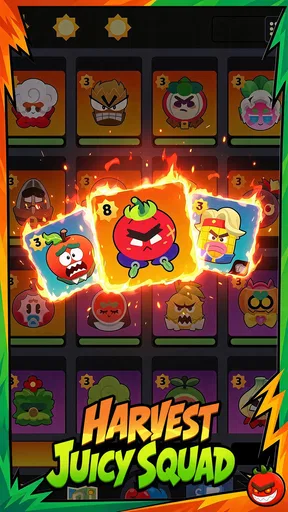
- Colorful plant characters give the game a distinctive visual style.
- Multiple defensive units encourage varied team strategies.
- Short sessions work well for quick mobile gaming breaks.
- Progression systems provide goals beyond simply completing levels.
Limitations of Plants on Fire: Clash & Defend
- Some upgrades may require significant grinding to unlock.
- Difficulty can increase sharply in later stages.
- Repeated enemy waves may feel predictable over time.
- Limited energy or timers can interrupt longer play sessions.
- Online features may be affected by connection or matchmaking issues.
Similar Picks in This Category
View All
Clash of Clans
Supercell4.5

Plants vs. Zombies™
ELECTRONIC ARTS3.7

Lords Mobile: Kingdom Wars
IGG.COM4.5

Clash Royale
Supercell4.4

State.io — Conquer the World
CASUAL AZUR GAMES4.1

Car Driving School : Car Games
Spark Game Studios3.9
Frequently Asked Questions
What is Plants on Fire: Clash & Defend?
Plants on Fire: Clash & Defend is a strategy and tower-defense game in which you place and upgrade plant-based defenders to stop waves of enemies. The game combines quick battles with tactical positioning, resource management, and progression systems. Before downloading, players should expect a casual experience focused on repeated stages, unlocking stronger units, and adapting their defenses to different enemy types.
How does the gameplay work?
The main gameplay revolves around defending your position by selecting suitable plants, placing them strategically, and improving their abilities during or between battles. Each plant generally has a different role, such as dealing damage, slowing enemies, or protecting other units. Success depends less on tapping quickly and more on building a balanced team and changing your strategy when tougher waves appear.
Can Plants on Fire: Clash & Defend be played offline?
Some parts of Plants on Fire: Clash & Defend may be available without a constant internet connection, particularly standard gameplay that has already been downloaded. However, online access can still be required for advertisements, cloud saves, updates, events, purchases, or other connected features. If offline access is important to you, it is best to test the game after installation rather than assuming every mode works without internet.
Is Plants on Fire: Clash & Defend free to download?
The game can generally be downloaded at no initial cost, but free access may include optional in-app purchases and advertising. Purchases can potentially provide extra resources, faster progression, or cosmetic and gameplay-related benefits, depending on the version available in your region. Players who prefer not to spend money should review the store listing and device purchase settings before allowing children to play.
Is Plants on Fire: Clash & Defend suitable for children?
Plants on Fire: Clash & Defend uses colorful plant characters and cartoon-style combat, making it approachable for younger players, but suitability depends on the child’s age and the game’s current store rating. Parents should check whether the app includes advertisements, in-app purchases, online features, or data collection. Enabling parental controls is recommended, especially if the device is shared with children.
Play our best games!


